AI Chatbot Lead Routing for Ecommerce and Real Estate Teams

TL;DR
For AI lead routing by industry, ecommerce teams need Matram to separate buying questions, wholesale opportunities and post-purchase support.
Real estate teams need Matram to identify buyers, sellers, renters and viewing enquiries, then capture the area, property type, budget and timeline that matter to the receiving agent.
HubSpot works well for contact records and sales follow-up. Zendesk suits support queues. A signed webhook provides a controlled path to other CRMs and workflows.
Territory, pipeline and ownership rules should remain in the CRM or automation layer where the team already manages them.
Matram should pass useful context, not make commercial decisions the source content cannot support.
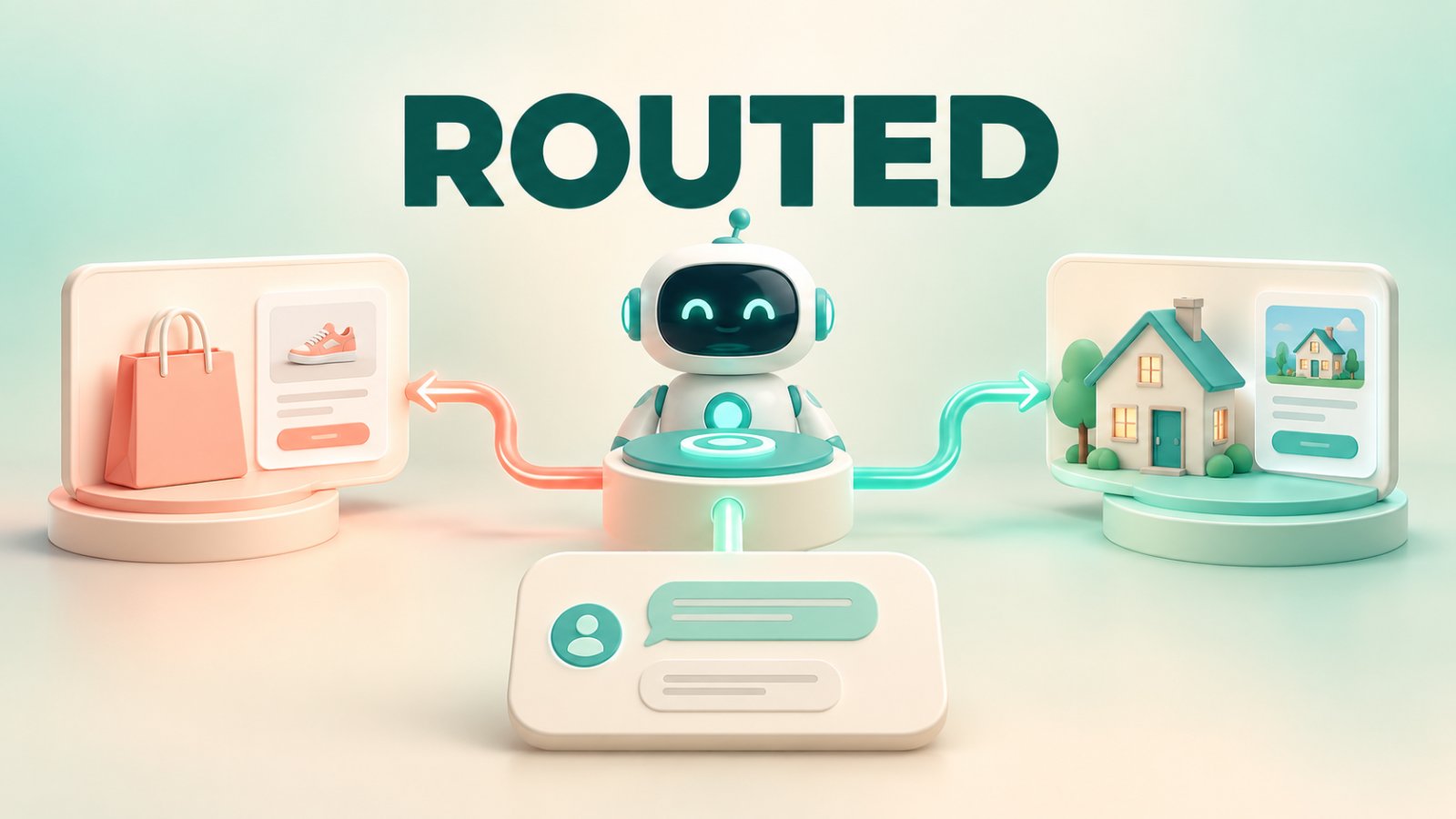
Short answer: AI lead routing by industry means qualifying and sending leads according to how a specific team sells. With Matram, an ecommerce enquiry can reach sales or support with the shopper's details and conversation context, while a real estate lead can be routed according to intent, area, budget and timeline. Matram can upsert contacts in HubSpot, open Zendesk tickets or send an HMAC-signed webhook to another system. The routing destination may be shared, but the information collected before handoff should not be.
Introduction
A lead is not properly routed because it reached a CRM. It is properly routed when the right person receives enough context to act without reopening the chat, repeating every question or guessing why the visitor matters.
That distinction is important for ecommerce and real estate. A shopper asking about 200 units of a product should not land beside a routine return question. A buyer looking for a two-bedroom apartment next month should not enter the same queue as a seller requesting a valuation. The contact details may look similar, but the next action is not.
This is where AI lead routing by industry becomes useful. Matram answers from the business's own content, captures the details needed for follow-up and sends the lead with the conversation attached. The business then applies its own ownership rules in HubSpot, Zendesk or a workflow reached through a signed webhook.
Why one routing flow fails both industries
An ecommerce conversation is usually tied to a product, policy or transaction stage. A real estate conversation is more likely to depend on location, property type, budget, timing and whether the person wants to buy, sell or rent. Asking both visitors the same five questions creates friction and still leaves the team short of useful information.
Matram allows the first part of the exchange to stay helpful. It can answer from product pages, policy pages, listings, area guides and uploaded material before asking for contact details. That makes the capture feel connected to the visitor's question rather than inserted as a gate.
Here is the practical difference:
| Routing decision | Ecommerce team | Real estate team |
|---|---|---|
| First intent to identify | Product advice, wholesale interest or support | Buy, sell, rent or book a viewing |
| Useful context | Product, quantity,delivery need and issue type | Area, property type, budget and timeline |
| High-priority signal | Bulk order, purchase blocker or urgent dispute | Near-term move, qualified seller or viewing request |
| Likely destination | Sales, wholesale desk or support queue | Buyer agent, seller team or area specialist |
| Safe fallback | General sales or support queue | Central enquiry queue |
Use fields the receiving team can act on. Do not collect information simply because the chatbot can ask for it.
How AI lead routing by industry works for ecommerce
For ecommerce, AI lead routing by industry starts with one clean split: is the visitor trying to buy, or do they need help with something that has already happened?
Matram answers questions about sizing, materials, compatibility, shipping and returns from the store's published pages. If the conversation becomes a wholesale enquiry, Matram can capture the person's name, email, company, approximate quantity and product before routing it. “Wholesale enquiry, 200 units, required in June” gives sales a useful start. An email address alone does not.
A sensible ecommerce route
- Answer first. Matram should use indexed store content and show the source. It should never invent stock, compatibility or a delivery promise.
- Identify the conversation type. Separate product interest, wholesale demand and post-purchase support. Do not send every chat to sales.
- Collect useful details. Name and email may suit an ordinary enquiry. Wholesale may also require company, quantity and required date.
- Choose the destination. Matram can upsert a sales contact in HubSpot, open a Zendesk ticket for a service issue or post the lead and conversation to a custom endpoint through a signed webhook.
- Apply ownership after delivery. Let the CRM or workflow assign wholesale enquiries, regions and product categories according to rules the business already maintains.
Matram does not connect to a cart or order API by default. It cannot check a live order number, inspect checkout behaviour or confirm inventory absent from indexed content. Those requests should reach a person or existing commerce tool, not be presented as sales leads.
For a closer look at the capture stage before routing, read Matram's lead-generation chatbot guide. It explains why structured details matter before a lead enters a sales process.
How AI lead routing by industry works for real estate
For real estate, the requirement matters. “I am looking for an apartment” is not ready to route. “I want to buy a two-bedroom apartment in Jumeirah within three months, with a budget of AED 2 million” gives an agent something useful.
Matram can answer from crawlable listings, neighbourhood guides and buying or selling content. It can then ask the team's qualifying questions:
- Are you buying, selling or renting?
- Which area or areas are you considering?
- What property type do you need?
- What is your budget band?
- When do you expect to move or transact?
- How should the team contact you?
If the visitor already gave a location or budget, Matram should not ask again. A person seeking a general process answer does not need a full qualification sequence.
Matram can send the contact and conversation to HubSpot or through a webhook. The destination can be assigned by area, transaction type or team availability. Matram can open a Zendesk ticket when the exchange belongs in a service queue.
Matram does not pull live MLS or IDX data or directly sync with specialist real estate CRMs such as Follow Up Boss, kvCORE or Chime. A signed webhook can feed a custom workflow, but the business must build and monitor it. Listing availability should come only from current, crawlable content or a person.
The real estate chatbot guide for Dubai covers the qualification questions and handoff moments that matter when property enquiries arrive outside office hours.
Build the routing logic around Matram's role
A reliable AI lead routing by industry workflow gives each system a narrow job. Matram handles the grounded conversation, capture and delivery. The CRM or help desk stores the record and decides ownership, territory, pipeline stage and follow-up deadline.
1. Define the minimum accepted lead
Define what makes a lead useful. Ecommerce wholesale may require contact details, product and quantity. Real estate may require intent, area and timeline. Separate optional fields from required ones.
2. Create clear intent boundaries
Matram needs a defined path for sales, support and uncertain enquiries. A return dispute belongs in support. A bulk purchase belongs in sales. A property-management complaint should not reach a buyer agent because the visitor mentioned an address.
3. Select the delivery method
Use Matram's HubSpot action for a contact record and conversation note, Zendesk for tickets, or the HMAC-signed webhook for another CRM or workflow. Verify the signature before accepting the payload.
4. Keep assignment rules downstream
Do not bury territory or round-robin logic inside conversational wording. Store those rules where operations teams already update them. Matram should deliver consistent fields and context; the destination workflow should decide who owns the record.
5. Create a recoverable fallback
When a field is missing or delivery fails, send the record to a visible general queue. Preserve the conversation, record the failure and assign responsibility for retrying it.
Test with real conversations, not ideal scripts
Before launch, test AI lead routing by industry with incomplete answers, misspelled locations, mixed intents and visitors who change their mind.
For ecommerce, test a normal product question, a large-volume request, a return dispute and an order-status question Matram cannot answer. Confirm that the first two reach the correct sales path, the dispute becomes a support handoff and the order request is not answered with invented data.
For real estate, test buyers, sellers, renters, multiple areas, missing budgets and a request about a listing that is no longer published. Confirm that Matram keeps the transcript, avoids unsupported availability claims and sends ambiguous enquiries to the fallback queue.
Inspect the destination too. Check whether HubSpot matched a returning email, Zendesk received the requester and transcript, and the webhook receiver verified the signature. A good chat is not enough if the record arrives incomplete.
Matram's broader chatbot use-case guide can help teams build a test set from real customer questions instead of polished demo prompts.
Measure whether routing improves follow-up
Good reporting separates delivery from response. Matram may send a complete record successfully, but the receiving team can still leave it untouched.
Track these measures:
- percentage of captured leads delivered successfully
- percentage with the required qualification fields
- number of records sent to the fallback queue
- duplicate rate for returning contacts
- time from capture to assigned owner
- time from assignment to the first human response
- percentage accepted as relevant by the receiving team
Review exceptions weekly. If ecommerce chats keep falling into “other,” tighten the intent boundaries. If property leads lack an area or timeline, adjust the questions.
Frequently asked questions
What is AI lead routing by industry?
It is the practice of qualifying and directing leads according to the information, urgency and ownership rules of a specific sector. Matram supports the conversational part by answering from approved content, capturing details and sending the lead with context to HubSpot, Zendesk or a signed webhook.
Can Matram decide which salesperson owns a lead?
Matram can deliver structured contact details and the conversation. Territory, round-robin, pipeline and account-ownership rules should run in the CRM or downstream workflow where the business already manages them.
Can Matram route ecommerce order-status questions?
Matram can identify that the visitor needs support and hand the conversation over, but it does not read a live cart or order API by default. It should not claim an order status it cannot verify.
Can Matram route lead to a real estate CRM?
Matram has no native integration with specialist platforms such as Follow Up Boss, kvCORE or Chime. Teams can use its signed webhook as an input to a custom integration, provided they build, secure and monitor the receiving workflow.
Should every visitor be asked for contact details?
No. Matram should answer straightforward questions first and request details when follow-up, qualification or human help has a clear purpose. This keeps the experience useful and reduces low-intent records.
Give every lead a useful next step
AI lead routing by industry works when the route reflects the sale. Ecommerce teams need to distinguish purchase questions, wholesale demand and support. Real estate teams need intent, place, budget and timing before deciding who should respond.
Matram keeps that process grounded. It answers from your content, captures the fields your team actually uses and sends the contact with the conversation attached. HubSpot can hold the sales record, Zendesk can hold the support ticket, and a signed webhook can connect a controlled custom workflow. Your existing systems retain the final ownership rules.
Book a Matram demo and test the route with last month's real ecommerce or property enquiries. Check the fields, destination, context and fallback before switching it on for every visitor.
See Matram in action
Watch it answer from real content, with the exact source page cited, on the live demo.
Book a demo